The New Sonic Standard: Indian Nightclub Trends in 2026
There is a myth about Indian nightlife — that it is simply a loud room with louder music, a chaotic blend of flashing lights and watered-down drinks where the only goal is excess. It is a persistent myth. And it is entirely wrong.
India’s nightlife industry is evolving at a breakneck pace. The crowd has changed. Today’s patrons have traveled the world. They have stood in the warehouse clubs of Berlin and the velvet-rope venues of Manhattan. They have come home, and they expect the night to meet them where they are.
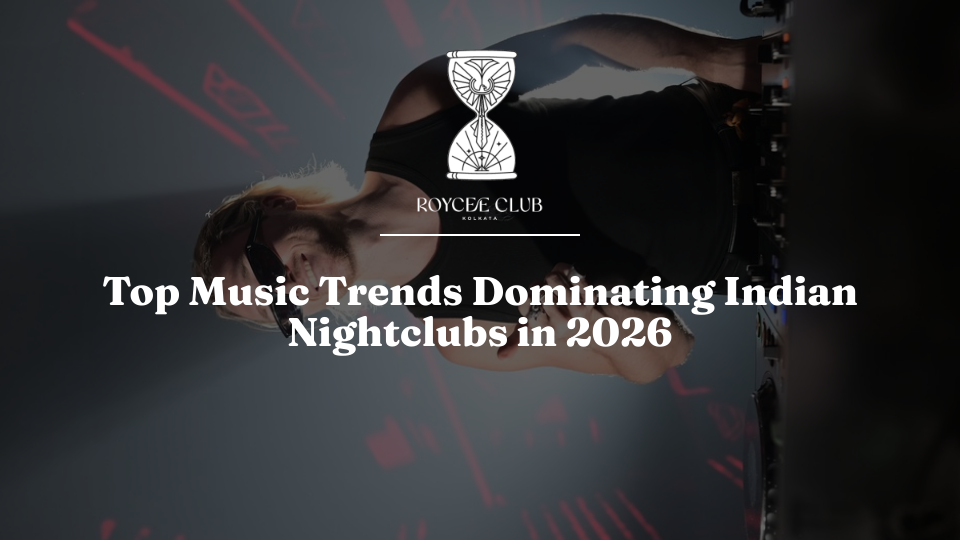
As we track the top music trends dominating Indian nightclubs in 2026, the landscape is shifting from mass-market chaos to curated excellence. Affluent millennials and Gen Z are no longer satisfied with overcrowded rooms that prioritize volume over curation. They demand purpose, connection, and elevated aesthetics. This is not about going out. This is about arriving.
The Death of the Generic Playlist
Most clubs book DJs. Elite venues curate artists. There is a difference.
In the past, venues relied on familiar hits played at maximum volume to dictate the energy of the room. That era is over. The new guard of nightlife refuses to settle for a playlist on shuffle. They demand a music program that feels intentional.
The artists defining 2026 do not play to the crowd. They read the room like a book and turn the page at exactly the right moment. The lineup is selected for sonic fit. The sound system is engineered for absolute precision. The bass finds you before the light does. Somewhere between the second drink and the third song, you stop checking the time.
A Shift in Frequencies: The Spiritual Nightlife Movement
You expect the heavy bass drop. You do not expect the devotion.
One of the most fascinating cultural shifts dominating Indian nightclubs in 2026 is the rise of spiritual nightlife. A new generation is actively embracing a movement that blends traditional devotional songs with techno beats. This is not a gimmick. It is a cultural reset.
For a demographic overwhelmed by digital noise, chanting alongside thousands of peers to a precision-engineered sound system offers a collective high. They are reclaiming devotion and wrapping it in modern aesthetics. They prove that the night does not have to be destructive to be unforgettable. It is an alcohol-free, anxiety-free space for mindful connection.
The Arrival of Physical AI and Spatial Audio
Most clubs buy better lights. The best clubs change reality.
The convergence of Physical AI and spatial computing is rewriting the rules of the premium nightlife sector. A room now reads the crowd's energy — not through human intuition alone, but through advanced sensory inputs. These systems adjust the acoustics and visual projections in real-time.
The environment becomes fluid. It reacts to the pulse of the room. The atmosphere at 1 AM feels entirely distinct from the peak at 3 AM. This is where the standard elevates. It is the end of the static nightclub.
The Architecture of the Crowd
Exclusivity is often weaponized in nightlife. At the top tier, it is functional. It exists because the sonic atmosphere depends entirely on composition.
The right mix of energy, intention, and respect makes the room work. Crowd curation is not a marketing tactic; it is the product. When a venue is filled with culture builders and music purists who understand the assignment, the collective energy shifts. The music hits harder. The hours slip away unnoticed. This is not a night for everyone. That is a feature, not a flaw.
The 4 AM Structural Advantage
Time dictates the rhythm of a party. In a country where most premium venues start shutting down by 1:30 AM, time is a strict constraint. Pushing the boundaries of time is not a detail. It is a structural advantage.
The best energy of any night happens after midnight. It happens when the early crowd has gone home, the music shifts from warm-up to peak, and the room finds its true rhythm. Elite venues give the night the time it needs to become what it wants to be. At 3:30 AM, the artist plays the track they have been saving all night. At 4 AM, when the lights come up, nobody is surprised. They knew this was coming.
Frequently Asked Questions About 2026 Nightlife Music
What is bhajan clubbing?
It is a cultural movement blending traditional devotional music with techno and electronic beats. It offers an alcohol-free space for mindful connection, replacing mass-market chaos with collective effervescence.
How do premium venues curate their music?
They select artists based on sonic fit rather than name recognition. The goal is to build a coherent, intentional set that matches the specific energy of the room, treating resident artists as creative partners.
Why is a 4 AM closing time important for music?
Electronic and curated music requires time to build. A 4 AM license allows artists to craft a set that transitions naturally from warm-up to peak, giving the room the hours it needs to reach its ultimate energy.
The Night Belongs to Those Who Choose It
India’s nightlife is at an inflection point. The old guard is fading. The new generation of guests demands more curation, more intention, and more respect for their taste. The top music trends dominating Indian nightclubs in 2026 all point to one reality. The night is no longer about volume. It is about craft.
Roycee Club was built for this exact moment. It stands as a declaration of what luxury nightlife should be. A space where the music is curated, the crowd is composed, and the hospitality is flawless.
You do not just go out. You arrive. Secure your VIP table booking via direct message on Instagram at @royceeclub, step into the gold and black, and claim your place in the room.
This is not a nightclub. This is a standard. And the night is just beginning.